Wecycle makes clearing away your junk or unwanted debris quick, efficient, and convenient—on your schedule.


BLOG / HOW TO
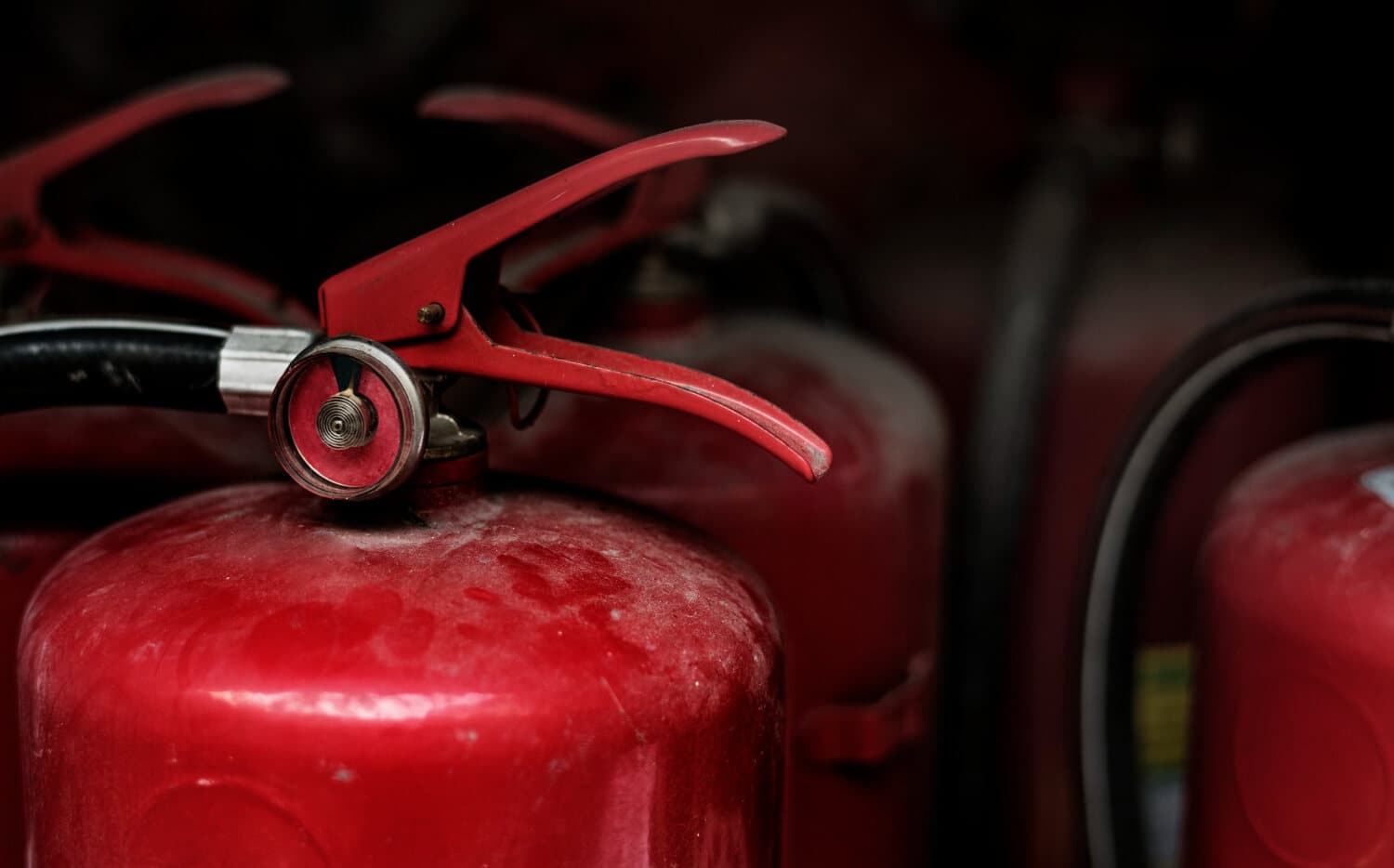
We all know how important fire extinguishers are, but what happens when one is no longer useful? Whether it's expired, discharged, or just plain old, they should never be thrown away in the trash.
After all, proper disposal is the ultimate key to keeping yourself, others and the environment safe. In the following discussion, we will be talking about how to dispose of an old fire extinguisher along with other relevant topics.
Continue reading!
Many of us have the common misconception that tossing an old fire extinguisher in the trash is the best call. However, it is not what it seems. Here’s why:
These extinguishers are designed to hold in a lot of pressure (as high as 100psi or more). Meaning, if you throw it carelessly, it has a higher chance to explode or cause severe damage. So, even if it looks empty, a little leftover pressure might be still hanging around.
They tend to contain harmful chemicals, designed to put out fires. For instance, extinguishers that use chemicals like monoammonium phosphate, sodium bicarbonate, or potassium bicarbonate could contaminate the soil or water if improperly disposed of. Hence, it’s essential to treat them as hazardous waste and dispose of them the right way.
Based on your location, there may be several laws on dispose of fire extinguishers. And not following them can lead to serious fines/penalties, especially if it’s under local hazardous waste disposal rules.
Apart from being a fire hazard, they can have a serious impact on the pollution. For example, if the chemicals inside them can somehow make their way into the environment, they can have a drastic impact on the wildlife and ecosystems, something you will never want.
Read More: Eco-Friendly Junk Removal
Not all kinds of fire extinguishers are created equally, and not all need to be replaced right away. Luckily, there are some signs to figure to out, such as the following:
They have expiry dates, in fact, they are typically labeled as “manufacture date” or “service due” date. Hence, if yours is past that mark (5-15 years, based on the type), it’s time to let it go. Over time, the inside pressure decreases, with the contents becoming degraded. In case you cannot find the expiration date, the best thing is to get checked by a professional.
The pressure gauge is that little dial you will find on the top of the fire extinguisher, this basically shows whether it’s fully charged and ready to let go. For example, if the needle is in the “green” zone, it will be good to go, whereas if it’s anywhere in the “red” zone, it will mean either it is “undercharged” or “overcharged,” in that case, your extinguisher might not work when you need it the most.
Any kind of physical damage could compromise the extinguisher’s ability to function properly, no matter how good it looks. This can be anything from a bent nozzle to a loose handle.
If a fire extinguisher has been discharged, it should no longer be relied on. No matter how small the fire was, the remaining chemicals will not be enough to fight another one. So, if it is used recently or a long time ago, the ideal call is to let it go.
Some fire extinguishers, especially the old ones might not meet the current safety standards. Hence, if yours is a vintage model or the one that hasn’t been serviced in years, it’s worth checking the website or contacting them for advice.
Disposing of an old fire extinguisher might sound complicated, but with the below-mentioned steps, you will find it super easy:
First and foremost, safely dispose of the fire extinguisher. That is, you need to make sure it’s fully discharged, especially if it still has pressure inside.
Many local governments have specific rules for disposing of hazardous materials. You can usually find this information on the city's website or by contacting the waste management service.
There are several recycling centers, a fire department, or a special hazardous waste collection event to take your fire extinguisher to recycle the metal parts.
However, if your area doesn’t have a recycling center that accepts fire extinguishers, make sure to try a hazardous waste collection facility. As they are fully equipped to handle chemicals and pressurized containers safely.
If you are struggling to find a nearby recycling center or fire department, you can always hire a hazardous waste disposal company to take care of it for you.
Some services even offer home pickup, which can be super convenient if you have a hard time finding a drop-off location nearby.
Before you send your extinguisher on its way, give it one last look-over. Double-check that:
When it comes to how to get rid of a fire extinguisher, doing it the right way is what really matters. From following the exact steps to keeping the space safe, you will be doing your part to protect the environment.
Also, keep in mind there are no shortcuts. Hence, make sure to dispose of it responsibly, ultimately giving yourself the much-needed peace of mind in the process.
Fire extinguishers typically have a date of manufacture and expiration date printed on the label. Hence, make sure to check the label to see if the expiration date has passed.
No, fire extinguishers should never be thrown in the dumpster, no matter what due to the presence of potential hazards inside.
Instead, the best call is to take them to a recycling center or awaste disposal facility where they can be safely handled.
Expired fire extinguishers should never be used in an emergency. If your extinguisher is expired, consider recharging it (if possible) or take it to a recycling center or hazardous waste disposal facility. Some fire departments accept expired extinguishers for recycling, so it’s worth asking.
WeCycle official account. This comes down to two main things for me: composition and stability. The composition model of React was the right architecture choice in the beginning, and continues to have benefits. For example, AI models are able to generate encapsulated components you can drop into your app without affecting global state.
Enter your zip code to see if Wecycle operates in your location.
KB Chowdhury