Wecycle makes clearing away your junk or unwanted debris quick, efficient, and convenient—on your schedule.


BLOG / HOW TO

Every act of creation is first an act of destruction. – Pablo Picasso.
It sounds dramatic, but it's a perfect description when you're looking at that old tilting fence in your backyard. You can't create something new until you destroy the old one.
And that’s where the frustration begins. The panels start cracking. The posts won’t budge because they’re buried in concrete. Then there’s the mess of wood and metal piling up in your yard. It always looks easier than it really is.
That’s why you need to know how to remove a fence. Here we'll take you through it step by step, from planning and safe removal methods to recycling the materials in an eco-friendly way. So nothing goes to waste.
Before you start tearing down that old fence, take a moment to prepare. These simple steps will save you from legal trouble, safety hazards, and cleanup headaches later.
Know your property line: Don’t assume the existing fence sits on the right boundary. Check your property deed or plat map, or hire a licensed surveyor if you’re unsure.
Discuss with neighbors: If the fence is on or near the shared property line, let your neighbors know your plans. Some states even require written notice before removing a shared fence to prevent disputes.
City and HOA regulations: Some cities and homeowners’ associations require permits for fence removal or have specific rules about the process. A quick call to your local planning office or HOA can save you from unexpected fines.
Underground utilities: Dial 811 before digging. Utility companies will mark underground lines for free so you don’t accidentally hit gas, water, or electric lines.
Overhead lines: Check for power or service lines above the fence and keep a safe distance while working near them.
Recycling options: Untreated wood, metal, and even concrete can often be recycled or repurposed instead of going to a landfill.
Debris removal: For larger projects, consider renting a dumpster or scheduling a pickup with a local recycling center or junk removal service.
Temporary barriers: If you’re removing a fence that keeps pets or children in the yard, set up a temporary barrier until a new fence is installed.
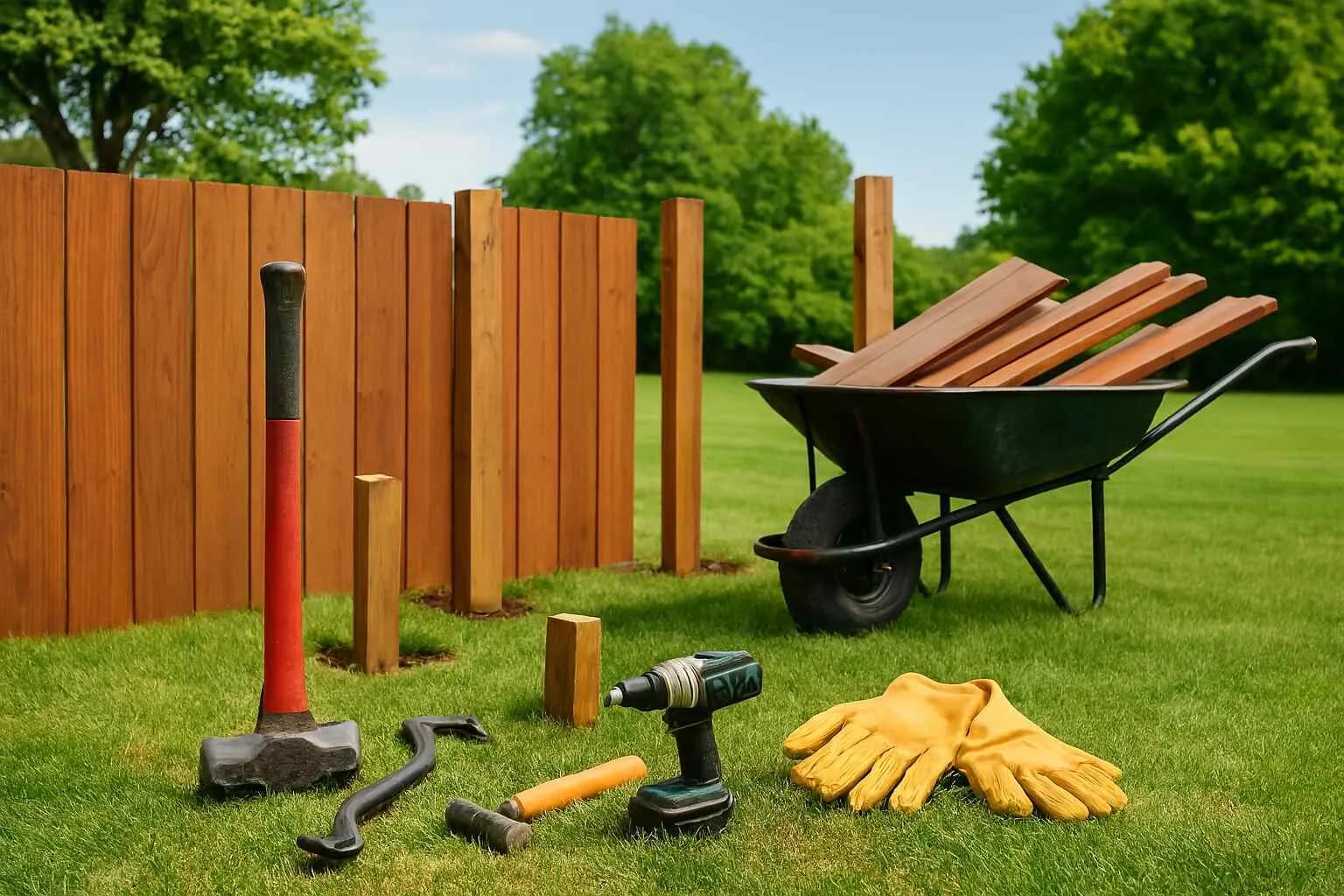
Having the right tools on hand can make fence removal faster, safer, and a lot less frustrating. Here’s what you’ll need:
Removing a fence is much easier when you break it down into smaller steps. Follow this simple process to keep things safe, organized, and efficient:
Before you touch the fence, clear the space around it. Move any plants, garden furniture, or yard decorations out of the way. If the fence keeps pets or kids inside the yard, put up a temporary barrier for safety. Finally, gear up with work gloves, safety glasses, and sturdy boots to protect yourself from splinters, nails, and falling debris.
Taking down panels carefully lets you reuse or recycle them later.
Pro tip: If the panels are still in good shape, stack them neatly so they can be reused, donated, or sold.
With the panels out of the way, it’s time to remove the posts.
These are the tricky ones but it’s doable with the right approach.
Know more: Eco-Friendly Junk Removal: The Complete Guide to Sustainable Waste Disposal
Once the fence is down, you’ll likely be staring at a pile of wood, metal, or concrete and wondering what to do next. Instead of sending everything to the landfill, here are some smart and eco-friendly ways to handle old fence materials:
Many organizations, like Habitat for Humanity ReStores, accept gently used building materials. They resell or reuse them for affordable housing projects, which keeps waste out of landfills and supports a good cause.
For larger projects, renting a dumpster or hiring a junk removal service can save you multiple trips to recycling centers. Some services even sort materials for recycling automatically.
Removing a fence might seem simple, but it comes with real safety risks, sharp nails, heavy posts, and even buried utility lines. Before you swing that hammer, keep these safety tips in mind:
A post puller, pry bar, or jackhammer can save you from injuries caused by forcing things loose. Let the tools do the heavy work.
Taking down an old fence may feel like a big job, but with the right plan, tools, and safety steps, it becomes much more manageable. From confirming property lines to recycling old materials, each step helps you avoid headaches, stay safe, and keep the project eco-friendly.
Whether you’re replacing the fence or leaving the yard open, proper preparation ensures the work goes smoothly and nothing gets damaged in the process.
So, gather your tools, follow the steps we covered, and start fresh with confidence. Because removing that old fence is the first step toward building something better.
The easiest way is to use a post puller or jack to lift the post and its concrete footing out of the ground. If the footing is too large or deep, you may need to break the concrete apart with a sledgehammer before removal.
Yes, if the panels are in good condition. Wooden panels can be reused for DIY projects or donated, while metal and vinyl panels may be recycled or repurposed for new fencing.
In some cities or neighborhoods, you may need a permit, especially if the fence is shared with a neighbor or regulated by a homeowners’ association (HOA). Always check local regulations before starting.
Start by detaching the chain-link fabric from the tension bars, then remove the top rail and posts. Use gloves and safety glasses since metal edges can be sharp.
Wood, metal, and concrete can often be recycled. Untreated wood may be repurposed for landscaping or DIY projects, while scrap metal can be taken to a recycling center.
Enter your zip code to see if Wecycle operates in your location.

KB Chowdhury